Guide to Splitting Groups/ Adult Lesson Best Practices
People Skills Fundamentals
(Guides all guest interactions)
Build relationships based on trust — create an environment where guests feel seen, heard, and supported.
Engage in meaningful, two-way communication — listen actively and respond thoughtfully.
Understand and manage your own emotions and actions — maintain professionalism and empathy.
Recognize and influence the emotions, motivations, and behaviors of others — adapt your approach to each guest’s needs.
Line-Up Expectations
Arrive on time: Be fully dressed, ready, and present to greet guests by 9:15 a.m.
Professional appearance: Follow the standards in the Employee Manual.
Be engaged: Smile, make eye contact, and be approachable.
Your first impression matters — make the most of it!
Conversation Starters:
Use these questions to connect and gather information about your guests:
Where are you from?
When was the last time you skied?
Have you been to Big Sky before? What was your favorite run?
Where else do you love to ski?
Can you ski parallel — some of the time or most of the time?
What type of terrain do you enjoy most — on-piste, off-piste, or both?
What do you want to work on today?
How was your morning? Did you sleep well and get a good breakfast?
How does your equipment feel — are boots snug but comfortable? No extra clothing inside boots?
Terrain-Based Questions:
Use visible landmarks to help gauge comfort and ability:
“Does Tippy’s Tumble look like fun, or would you prefer to stay near the bottom of Calamity Jane?”
Team Communication & Group Management
Communicate with instructors at the flags above and below your position.
Move guests between groups as needed to align goals, speed, and comfort levels.
Know the plan for your first run and those of neighboring instructors.
Have a contingency plan ready if a guest needs to move up or down a level.
Exchange contact info with adjacent instructors.
Never hesitate to ask a supervisor for assistance with splits or group adjustments.
Warm Up Laps
Purpose:
To ensure accurate and efficient group placement, especially on busy days.
Upper-Level Ski-Off (Levels 6–7):
Location: Safari
Supervisor will accompany instructors and assist with splits.
Lower-Level Ski-Off (Levels 4–5):
Location: Next to the Blue Tube
Supervisor may accompany instructors to assist with splits.
Group Splits
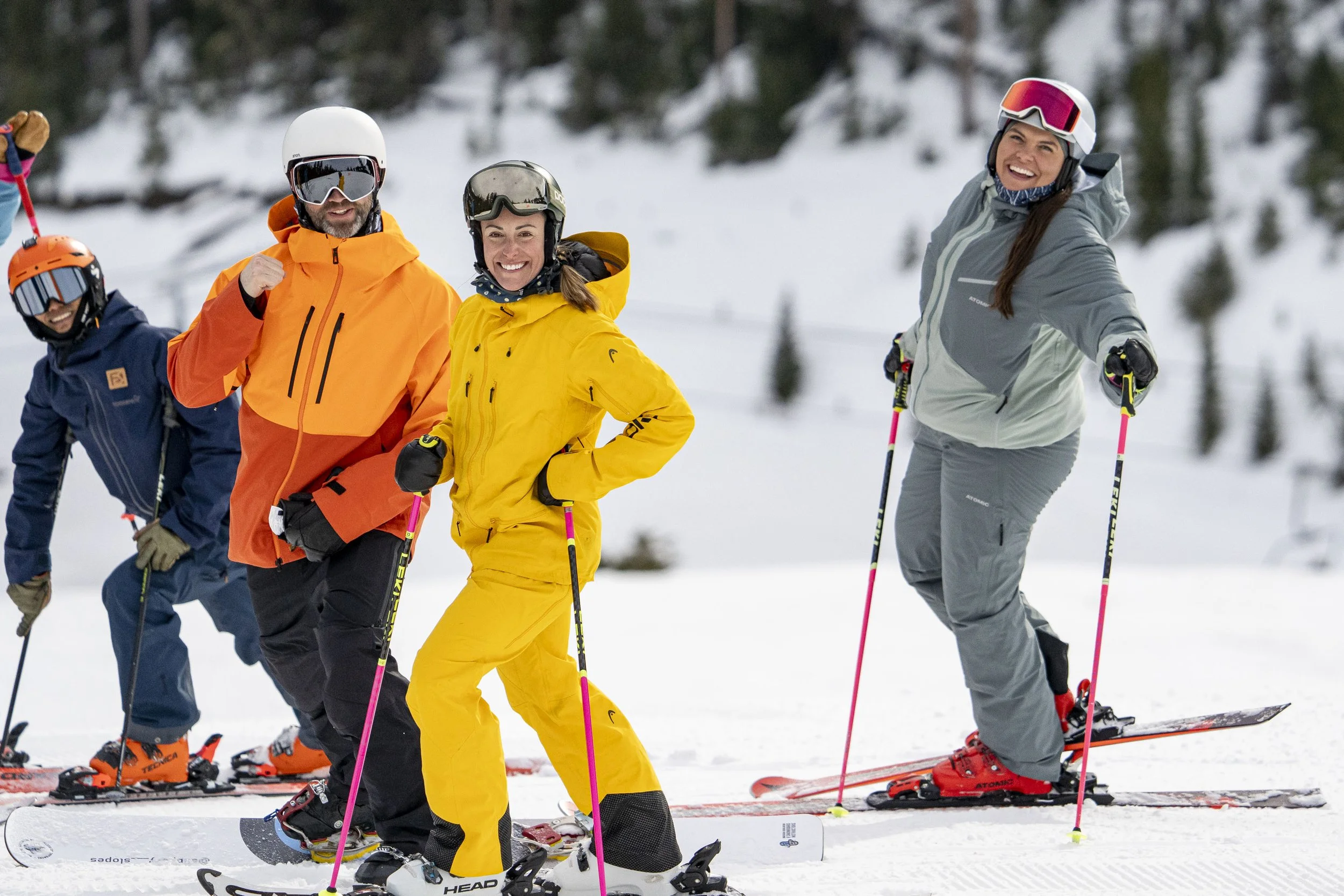
Groups should be split primarily by the terrain and speed guests wish to ski — not solely by technical ability.
While skiing ability determines which terrain can be navigated safely, desire, confidence, and comfort level are equally important.
Example:
A Level 6/7 guest who wants to ski fast, tackle bumps, and explore off-piste terrain.
A Level 6/7 guest who prefers a slower pace and groomed runs.
Both have similar technical skills but very different goals and comfort levels.
Your goal: Extract as much information as possible to ensure appropriate splits and create the best guest experience.